Late summer 1979
The House on the Truck
The house [Jake Von Riesen](entity:character-recall-character-jake-von-riesen-cbec228296b4) had built for his young family was sold under pressure from the car dealer next door and hauled away on a truck. [Yolandi Von Riesen](entity:character-recall-character-yolandi-von-riesen-573559d0d8f6), [Elfrieda Von Riesen](entity:character-recall-character-elfrieda-von-riesen-e9983485f8aa), [Lottie](entity:character-recall-character-lottie-0a006858536c), and Jake watched it disappear; Elfrieda kept saying she could still see it until it was gone.
A few days after the house was moved
The Badlands Camping Trip
While waiting to move into their new home, the family camped in the [Badlands of South Dakota](entity:location-recall-location-25042f683e97). Their propane stove erupted into towering flames, and Elfrieda danced around it singing [“Seasons in the Sun”](entity:expression-recall-expression-seasons-in-the-sun-f1a6ef0beaf6) as Jake swore and [Lottie](entity:character-recall-character-lottie-0a006858536c) laughed in shock.
The journey home from the camping trip
The Pictographs
On the drive back, Jake stopped at [Lake Superior](entity:location-recall-location-9606dd3c4f45) to see ancient Aboriginal pictographs. The family read warnings about dangerous waves, but Elfrieda clung to a rope above the water to inspect the paintings, which Jake learned had been called “forgotten dreams.”
After the family returned to East Village
The AMPS Design
Inspired by the pictographs, Elfrieda designed a mark using her initials and the words “[All My Puny Sorrows](entity:expression-recall-expression-all-my-puny-sorrow-6404061e0512),” with a large S enclosing the rest. At [Yolandi](entity:character-recall-character-yolandi-0aaa1865fb52)’s suggestion she considered making the mark less personally identifiable, and settled on the mysterious AMPS.
In the years after the family moved
The AMPS Campaign
Eager to make her presence felt, Elfrieda began painting AMPS on landmarks around [East Village](entity:location-recall-location-east-village-0476e509f93a), despite the community’s suspicion of conspicuous individuality. The marks remained visible for years, eventually fading faster than the pictographs that had inspired them.
When Elfrieda was fifteen
The Elders' Visit
A bishop arrived at the Von Riesen home with a procession of elders to challenge Elfrieda’s wish to study music at university. The men warned Jake that higher education would give his daughter dangerous ideas, while [Lottie](entity:character-recall-character-lottie-0a006858536c) refused to play the deferential hostess and left him to face their pressure.
During the elders' visit
Rachmaninoff in the Spare Room
As the elders pressed Jake, Elfrieda began playing Rachmaninoff’s Prelude in G Minor in the spare room. The music grew fierce and commanding, silencing the visitors and turning her performance into a declaration that her life and talent could not be contained.
Soon after the elders' visit
The Menno Simons Rebuttal
Energized by her defiance, Elfrieda framed a long quotation from Menno Simons condemning pride, greed, and cruelty, and hung it above the family’s living-room couch. She refused her mother’s request to take it down until Jake later asked whether she had made her point and said he wanted the embroidered steamship back on the wall.
During Elfrieda's adolescence
The Fresno Escape
After Elfrieda burned a revival tent in response to the church’s threats, the family left [East Village](entity:location-recall-location-east-village-0476e509f93a) on a road trip to [Fresno](entity:location-recall-location-ade7be73ea26). There she began a brief romance with a boy who tried to hide in the family car’s trunk when they departed; Jake discovered him, and Elfrieda tearfully kissed the boy goodbye before getting back in the car.
When Elfrieda was sixteen and Yolandi was ten
The Political Debate
Elfrieda staged a family debate with cardboard lecterns, assigning her parents and sister political roles and arguing about women’s rights and euthanasia. She was eloquent and prepared, and won decisively, though she had quietly bribed the judges with beer.
During the sisters' childhood
A Piano in Secret
Although pianos were forbidden in [East Village](entity:location-recall-location-east-village-0476e509f93a) because they suggested worldly pleasure, Jake and [Lottie](entity:character-recall-character-lottie-0a006858536c) secretly brought one into their home for Elfrieda. The elders eventually discovered it and permitted it only as an instrument for the Lord, but the family had already grown to treasure her playing.
During Jake's years as a schoolteacher
A Library for East Village
Jake persistently petitioned [East Village](entity:location-recall-location-east-village-0476e509f93a) residents to support a public library, knocking on doors in bitter winter weather until he gathered enough signatures. The town finally gave him a small, mildewed room and a modest budget; he hired Elfrieda to catalog the books, and father and daughter began planning the library together.
When Yolandi was about nine
The Canadian History Placemats
Jake took [Yolandi](entity:character-recall-character-yolandi-0aaa1865fb52) on the road from truck stop to truck stop to sell his illustrated [Canadian history placemats](entity:object-recall-object-0c9b1d82e403). Nobody bought them, and his daughter eventually found the earnest pitch embarrassing, but Elfrieda recognized how deeply their father’s disappointment had hurt him.
When Elfrieda was seventeen
The Night Before Oslo
Having finished high school early with top marks and scholarships, Elfrieda prepared to leave for [Norway](entity:location-recall-location-7fceb8f3598f) to study piano with a teacher she called the Wizard of [Oslo](entity:location-recall-location-8ba24cc3485b). On the airport drive, [Yolandi](entity:character-recall-character-yolandi-0aaa1865fb52) interviewed her for a school newspaper and asked about playing, leaving home, and who would turn the pages of her music.
On the drive home from Elfrieda's departure
The Upside-Down Car
After Elfrieda disappeared through airport security, [Yolandi](entity:character-recall-character-yolandi-0aaa1865fb52) and [Lottie](entity:character-recall-character-lottie-0a006858536c) drove home through snow with Jake asleep in the back seat. Lottie tested the icy road by tapping the brakes, and the car spun out and landed upside down in a ditch.
Before and during the sisters' childhood
The Family's Russian Past
The Von Riesen family carried the memory of their Mennonite ancestors’ flight from [Siberia](entity:location-recall-location-ca7b75778376) amid the violence of the [Bolshevik Revolution](entity:event-recall-event-bolshevik-revolution-785c2f802da9). Jake’s father had survived the murder of his own parents by hiding in manure, and warned that the children should not be taught Plautdietsch if they were to survive.
At seventeen
Elfrieda's First Departure
In [Oslo](entity:location-recall-location-8ba24cc3485b) and later across Europe, Elfrieda developed an international career as a concert pianist. Her departure freed her from [East Village](entity:location-recall-location-east-village-0476e509f93a)’s strict expectations, but distance also became part of the family’s unsettled rhythm of leaving and returning.
During Elfrieda's years abroad
The Sisters' Secret Letters
[Yolandi](entity:character-recall-character-yolandi-0aaa1865fb52) listened repeatedly to tapes Elfrieda sent from [Oslo](entity:location-recall-location-8ba24cc3485b), Amsterdam, and Helsinki, memorizing every breath and inflection as if she could keep her sister close by repeating her voice. Elfrieda urged Yolandi to write letters, insisting that ordinary days still counted as a life worth describing.
After several years abroad
Elfrieda's Return Home
After returning from [Norway](entity:location-recall-location-7fceb8f3598f) and other European cities, Elfrieda moved back in with her parents, spending long stretches in bed crying or staring at the wall. Her mood swung between listlessness and strange exuberance until, after months, she gradually regained her health and began playing again.
After Elfrieda resumed performing
Nic and Elfrieda Meet
[Nic](entity:character-recall-character-nic-45a1f85d3411) began taking piano lessons from Elfrieda largely because he wanted to sit beside her on the bench and have her guide his fingers onto the keys. They fell in love, and he later bought her a new piano bench, only for her to remove its padding because comfort had little to do with making music.
During her adult years before the main crisis
Yolandi Builds a Life in Winnipeg
[Yolandi](entity:character-recall-character-yolandi-0aaa1865fb52) had two children, [Will](entity:character-recall-character-will-17d4ceb7f768) and [Nora](entity:character-recall-character-nora-09eb671b4c0a), with two different men and tried to build a life through university, writing, and work. She became the author of a successful series of teen rodeo novels, while her relationships and attempts at adult stability repeatedly faltered.
Several years before the present crisis
Leni's Death
[Leni](entity:character-recall-character-leni-a0023eabf7cf), the daughter of [Yolandi](entity:character-recall-character-yolandi-0aaa1865fb52)’s aunt [Tina](entity:character-recall-character-tina-19081254867c), died by suicide in the [Fraser River](entity:location-recall-location-fraser-river-17d93ff8bcab). The loss joined a growing family history of suicide and left Tina and her relatives familiar with the helplessness and fear of trying to prevent someone’s death.
Three years after Leni's death
Jake's Suicide
Jake died by suicide on railway tracks, leaving [Lottie](entity:character-recall-character-lottie-0a006858536c) with a bag of his possessions and the family with an absence that never settled into the past. His death shaped [Yolandi](entity:character-recall-character-yolandi-0aaa1865fb52)’s fear of losing another loved one and Elfrieda’s sense that despair could be inherited and inescapable.
Before the main hospital admission
The First Starvation Crisis
During an earlier crisis, Elfrieda tried to disappear by refusing food and slowly starving herself. [Yolandi](entity:character-recall-character-yolandi-0aaa1865fb52) flew from [Toronto](entity:location-recall-location-toronto-64d205cf39d7) and called an ambulance despite Elfrieda’s pleas, beginning a painful pattern in which one sister fought to live and the other wanted to die.
During the first starvation crisis
A Dangerous Disagreement
In the emergency room, Elfrieda told [Yolandi](entity:character-recall-character-yolandi-0aaa1865fb52), “I hate you,” because Yolandi had called for help. Yolandi answered that she hated her too, and the sisters recognized the terrible truth that they loved each other while standing on opposite sides of the question of whether Elfrieda should live.
Before the main crisis
Yolandi's Toronto Separation
[Yolandi](entity:character-recall-character-yolandi-0aaa1865fb52) moved to [Toronto](entity:location-recall-location-toronto-64d205cf39d7) so [Nora](entity:character-recall-character-nora-09eb671b4c0a) could attend a ballet school, leaving [Will](entity:character-recall-character-will-17d4ceb7f768) to study in [New York](entity:location-recall-location-7a11f2949ca3) and trying to manage a deteriorating marriage to [Dan](entity:character-recall-character-dan-a3925e8b98d7). Her new city brought isolation, financial strain, and a complicated romantic life, even as she remained deeply connected to her family in [Winnipeg](entity:location-recall-location-winnipeg-9f327f04806a).
A few weeks before the opening concert
The Overdose
Erieda took an overdose of pills and left a note written in green marker, naming the people she loved and asking them to let her go. [Lottie](entity:character-recall-character-lottie-0a006858536c) found her unconscious, and [Yolandi](entity:character-recall-character-yolandi-0aaa1865fb52) flew from [Toronto](entity:location-recall-location-toronto-64d205cf39d7) to be at her bedside when she woke in the hospital.
After the overdose
The Hospital Reunion
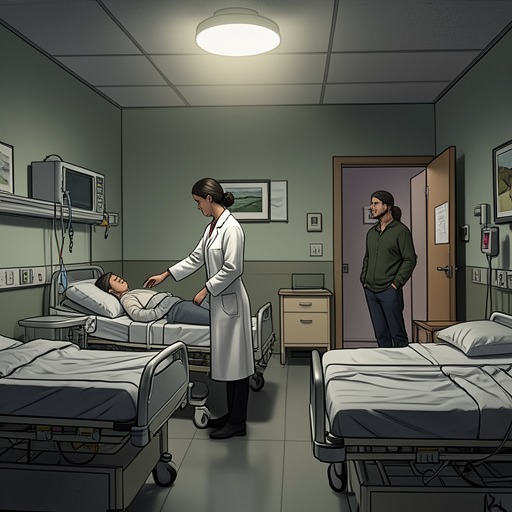
In the psychiatric ward, Elfrieda introduced [Yolandi](entity:character-recall-character-yolandi-0aaa1865fb52) to staff as her younger sister, joking even while restrained and heavily medicated. [Janice](entity:character-recall-character-janice-d86fff714ef3) tried to reassure her that seeking to end suffering did not make her bad, while Yolandi struggled to find language that might keep her sister safe.
During Elfrieda's hospital stay
The Glass Piano
Erieda confided that she felt an old upright piano made entirely of glass inside her abdomen and feared that it would break. Sounds such as bottles striking a garbage truck could make her clutch her stomach in terror, and [Yolandi](entity:character-recall-character-yolandi-0aaa1865fb52) accepted the image as a way of understanding her sister’s fragility.
During the hospital stay
A Tour She Cannot Face
Erieda told [Yolandi](entity:character-recall-character-yolandi-0aaa1865fb52) she could not perform her coming five-city tour and feared disappointing her agent, [Claudio](entity:character-recall-character-claudio-bc636d1e09c0), and the musicians expecting her. Yolandi insisted that the tour did not matter, while Elfrieda remained burdened by obligations she could no longer bear.
During the same admission
The Hospital's Refused Call
From [Lottie](entity:character-recall-character-lottie-0a006858536c)’s apartment, [Yolandi](entity:character-recall-character-yolandi-0aaa1865fb52) called the ward and was told that Elfrieda preferred not to speak and that staff would not bring the phone to her. Feeling shut out and powerless, Yolandi nearly threw her phone into the river, then turned her rage toward the hospital’s rules and her own inability to reach her sister.
While Elfrieda remains hospitalized
The Care Team That Never Arrives
[Nic](entity:character-recall-character-nic-45a1f85d3411) and [Yolandi](entity:character-recall-character-yolandi-0aaa1865fb52) tried to organize a team of psychiatric home-care workers so Elfrieda would not be left alone after discharge. They received little information and no dependable plan, while Elfrieda mocked the language of recovery programs and resisted being treated as a project to manage.
During the hospital crisis
The River-Crossing Boys
On a walk beside the river, [Yolandi](entity:character-recall-character-yolandi-0aaa1865fb52) and [Nic](entity:character-recall-character-nic-45a1f85d3411) encountered two foster boys carrying a canoe and planning to travel toward [Roseau River Reserve](entity:location-recall-location-eefb51fd42d1). Nic warned them that the river was too dangerous and gave them bus fare instead, taking the canoe to his home while the boys set off toward the place they hoped would be safer.
A few weeks after the overdose
The Discharge Announcement
Erieda suddenly told her family she felt like a different person, wanted to tour, and might move to [Paris](entity:location-recall-location-paris-c02b439ce220) with [Nic](entity:character-recall-character-nic-45a1f85d3411). [Yolandi](entity:character-recall-character-yolandi-0aaa1865fb52) doubted the recovery, but the hospital announced that Elfrieda would be discharged voluntarily, leaving the family with no reliable community-care plan.
The evening of Elfrieda's discharge
The Homecoming Dinner
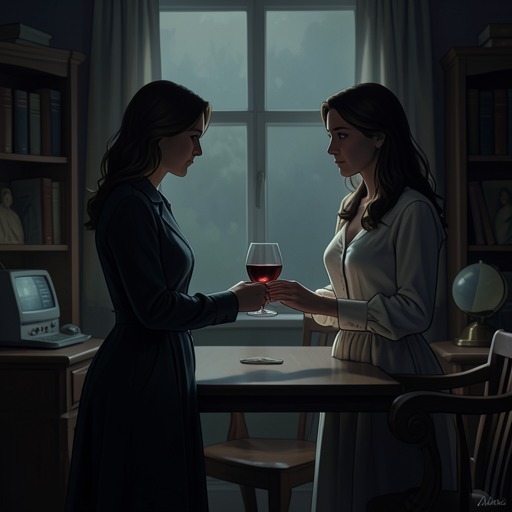
The family celebrated Elfrieda’s return with Indian food, wine, and Armagnac, but the hopeful talk of [Paris](entity:location-recall-location-paris-c02b439ce220) and tennis did not last. [Yolandi](entity:character-recall-character-yolandi-0aaa1865fb52) feared that the gathering was a fragile performance, while Elfrieda remained quiet and absorbed in a book.
During the hospital stay, before Elfrieda's discharge
The Plea for Switzerland
While still in the ward, Elfrieda asked [Yolandi](entity:character-recall-character-yolandi-0aaa1865fb52) to take her to [Switzerland](entity:location-recall-location-switzerland-0000fd9db54c) so she could end her life through assisted death. Yolandi refused, insisting that Elfrieda was not terminally ill, and left the room shaken by the force of her sister’s request.
Immediately after the Switzerland request
The Questions of Survival
[Yolandi](entity:character-recall-character-yolandi-0aaa1865fb52) asked whether Elfrieda could still imagine reasons to stay alive, but Elfrieda did not answer directly. Before Yolandi left, Elfrieda reminded her that she was not a slut, refusing to let her sister’s grief and sexual shame become another verdict against her.
After Elfrieda's request
Yolandi's Search for a Way Out
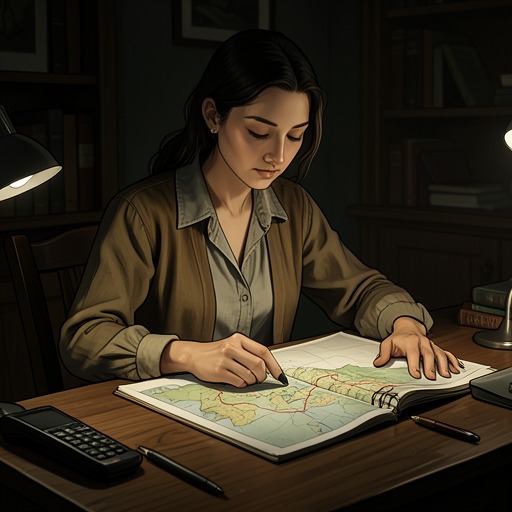
[Yolandi](entity:character-recall-character-yolandi-0aaa1865fb52) researched [Seconal](entity:object-recall-object-seconal-1564200d2bcd), [Nembutal](entity:object-recall-object-nembutal-2aa43de5a056), and the legal possibility of assisted death in [Zurich](entity:location-recall-location-zurich-ec6044bb74ec), while imagining what it would mean to help her sister die. She could not decide whether helping would be an act of love or a betrayal, and the thought began to consume her.
During the hospital stay
The Piano and the Sisters' Past
[Yolandi](entity:character-recall-character-yolandi-0aaa1865fb52) tried to draw Elfrieda back into life with stories of their childhood, including the times Elfrieda rescued her and the sisters played and laughed together. Elfrieda asked instead to hear about [Toronto](entity:location-recall-location-toronto-64d205cf39d7), reminding Yolandi that the present mattered even when the past offered easier comfort.
The day of the Winnipeg Symphony Orchestra opening
The Last Concert Attempt
After changing her mind again, Elfrieda was expected to perform with the [Winnipeg Symphony Orchestra](entity:organization-recall-organization-winnipeg-symphon-3620aac28650). [Lottie](entity:character-recall-character-lottie-0a006858536c) and her sister [Tina](entity:character-recall-character-tina-19081254867c) went to see her, despite Elfrieda’s request for solitude, and Lottie found her in the bathroom after she had cut her wrists and swallowed Javex.
The night of the opening concert
The Intensive Care Vigil
Erieda was placed on a respirator in intensive care because the bleach had damaged her throat, though her wrists were expected to heal. [Yolandi](entity:character-recall-character-yolandi-0aaa1865fb52) rushed back from [Toronto](entity:location-recall-location-toronto-64d205cf39d7) and joined [Lottie](entity:character-recall-character-lottie-0a006858536c), [Nic](entity:character-recall-character-nic-45a1f85d3411), and [Julie](entity:character-recall-character-julie-5a82eb7a07d7) at the hospital, where they held Elfrieda’s hands and searched her gestures for signs of what she needed.
During Elfrieda's intensive-care recovery
The Family's Old Wounds
As the family waited, [Yolandi](entity:character-recall-character-yolandi-0aaa1865fb52) remembered an earlier [Christmas](entity:time-recall-time-christmas-a573265d0167) when Elfrieda could not bear the performance of happiness and begged to escape the dinner table. She also recalled Jake’s failed placemat trip and his lonely work building the town library, recognizing how often Elfrieda had carried the family’s unspoken sorrow.
During Elfrieda's intensive-care stay
A Doctor Who Will Not Listen
[Yolandi](entity:character-recall-character-yolandi-0aaa1865fb52) tried to explain that Elfrieda could communicate in writing when she was silent, but the psychiatrist dismissed the idea as a silly game and said he had no time to read notes. Yolandi confronted him, furious that a vulnerable patient was being blamed for not communicating in the form most convenient to her doctor.
While Elfrieda was still unable to speak
The Question in the Dark
Alone with Elfrieda in the darkened room, [Yolandi](entity:character-recall-character-yolandi-0aaa1865fb52) asked how she could go on and accused her of hurting those who loved her. Elfrieda opened her eyes in alarm, then reached for Yolandi; the sisters apologized to each other, and Elfrieda wrote that she was afraid to die alone before circling the word [Switzerland](entity:location-recall-location-switzerland-0000fd9db54c).
The day after Yolandi returned to Winnipeg
Tina's Coronary Crisis
[Tina](entity:character-recall-character-tina-19081254867c) fainted twice, including once in the van on the way to the hospital, and broke her arm. Doctors found severely blocked arteries and admitted her for urgent heart treatment, bringing [Lottie](entity:character-recall-character-lottie-0a006858536c) and [Yolandi](entity:character-recall-character-yolandi-0aaa1865fb52)’s concern for Elfrieda into sudden conflict with fear for Tina.
During Elfrieda's psychiatric hospitalization
The Larkin Recitation
A pastor visited Elfrieda without the family’s permission and told her that faith would remove her pain. Elfrieda answered by reciting Philip Larkin’s poem “Days,” then took off her clothes before he could respond, using the only power she felt she had in the encounter.
The morning of Tina's heart surgery
The Farewell to Tina
Before [Tina](entity:character-recall-character-tina-19081254867c) went into surgery, the family crowded around her bed, teasing her and offering overbright assurances that everything would be fine. They sang the Plautdietsch song [“Du”](entity:expression-recall-expression-du-f53c3bded48f) and a hymn, while [Yolandi](entity:character-recall-character-yolandi-0aaa1865fb52) privately urged Elfrieda to keep fighting; Elfrieda said she had been fighting for thirty years.
The day of Tina's heart surgery
Tina's Fatal Operation
The operation initially appeared successful, but [Tina](entity:character-recall-character-tina-19081254867c)’s organs began failing afterward and the family lost her. [Lottie](entity:character-recall-character-lottie-0a006858536c) had lost her last sister, and the relatives sat together stunned by another death that had arrived after they believed the danger had passed.
Several days after Tina's death
The Funeral and the Ashes
At [Tina](entity:character-recall-character-tina-19081254867c)’s Mennonite funeral, relatives sang hymns and shared stories about her bold, affectionate life. During the memorial, a small child opened the urn and played with Tina’s ashes, an absurd interruption that did not stop the family from continuing to tell her story.
On the flight home from Tina's funeral
The Plan for Toronto
[Yolandi](entity:character-recall-character-yolandi-0aaa1865fb52) decided to invite Elfrieda to stay with her in [Toronto](entity:location-recall-location-toronto-64d205cf39d7) after discharge, hoping a new setting and the company of [Nora](entity:character-recall-character-nora-09eb671b4c0a) might help. She imagined renting a piano and even taking Elfrieda out on a small boat, while knowing that she could not guarantee safety or recovery.
After Tina's funeral
The Abandoned Home
[Yolandi](entity:character-recall-character-yolandi-0aaa1865fb52) returned to [Toronto](entity:location-recall-location-toronto-64d205cf39d7) and bought a dilapidated house near [Lake Ontario](entity:location-recall-location-lake-ontario-d92e7386403f), a funeral home, a psychiatric hospital, and a slaughterhouse. The house was hazardous and crumbling, but she imagined making it a shared refuge for herself, [Nora](entity:character-recall-character-nora-09eb671b4c0a), and [Lottie](entity:character-recall-character-lottie-0a006858536c).
Several months after Elfrieda's death
Lottie Moves to Toronto
[Lottie](entity:character-recall-character-lottie-0a006858536c) moved from [Winnipeg](entity:location-recall-location-winnipeg-9f327f04806a) to [Toronto](entity:location-recall-location-toronto-64d205cf39d7) to live with [Yolandi](entity:character-recall-character-yolandi-0aaa1865fb52) and [Nora](entity:character-recall-character-nora-09eb671b4c0a). She made friends around [Queen Street West](entity:location-recall-location-03b8f431d19e), joined a local church, visited shut-ins, and helped transform the wrecked house and neglected yard into a community project.
Elf's birthday, several months after her opening-day attempt
The Christmas Birthday Pass
While [Yolandi](entity:character-recall-character-yolandi-0aaa1865fb52) was still trying to raise money and decide what to do about [Switzerland](entity:location-recall-location-switzerland-0000fd9db54c), the hospital gave Elfrieda a day pass to celebrate her birthday at home. Yolandi feared the temporary release meant her sister was slipping beyond the family’s reach, but she could not stop the visit.
On Elfrieda's birthday
The Final Escape
[Nic](entity:character-recall-character-nic-45a1f85d3411) took Elfrieda home for lunch and then left briefly to bring her requested books from the library. When he returned, the house was empty; Elfrieda had gone to the railway tracks and died by suicide, repeating the method that had killed Jake.
The evening of Elfrieda's death
The Birthday Cake
[Yolandi](entity:character-recall-character-yolandi-0aaa1865fb52), [Nora](entity:character-recall-character-nora-09eb671b4c0a), [Will](entity:character-recall-character-will-17d4ceb7f768), [Lottie](entity:character-recall-character-lottie-0a006858536c), and [Nic](entity:character-recall-character-nic-45a1f85d3411) gathered in Elfrieda’s living room after her death. The birthday cake Lottie had ordered arrived anyway, and the family ate it on Elfrieda’s china beneath the evening light, facing the painful fact that their ordinary celebration had become a farewell.
The night after Elfrieda's death
Italy in August
[Nic](entity:character-recall-character-nic-45a1f85d3411) gave [Yolandi](entity:character-recall-character-yolandi-0aaa1865fb52) a manuscript Elfrieda had written, a book called Italy in August. Its narrator described fictional sisters who had protected and rescued her through despair, and its final pages said goodbye to the reader, revealing that Elfrieda had been preparing her own farewell.
The days after Elfrieda's death
The Family Aftermath
[Yolandi](entity:character-recall-character-yolandi-0aaa1865fb52)’s family tried to live through the first days without Elfrieda, sharing a bed, watching soccer, and exchanging shirts as a small ritual of closeness. Yolandi kept counting the goodbyes in Elfrieda’s manuscript and wondered whether she had ever truly intended to take her sister to [Zurich](entity:location-recall-location-zurich-ec6044bb74ec).
After Elfrieda's death
The Funeral Home Farewell
[Lottie](entity:character-recall-character-lottie-0a006858536c) insisted on seeing Elfrieda’s face before cremation, despite the damage caused by the train. [Yolandi](entity:character-recall-character-yolandi-0aaa1865fb52) remembered her sister’s old joke about a badly set table, then felt gratitude toward the funeral director for restoring Elfrieda’s appearance as much as possible for her mother’s final look.
After Elfrieda's cremation
The Burial Decision
[Nic](entity:character-recall-character-nic-45a1f85d3411) refused to divide Elfrieda’s ashes or bury her in [East Village](entity:location-recall-location-east-village-0476e509f93a), where she had never wanted to return. Her ashes were placed beneath a large tree at [Elmwood Cemetery](entity:location-recall-location-elmwood-cemetery-4f4f5f7da6d6), while [Yolandi](entity:character-recall-character-yolandi-0aaa1865fb52) continued to wonder whether [Zurich](entity:location-recall-location-zurich-ec6044bb74ec) might have offered a gentler death and whether she had failed her sister.
After the family returned to Toronto
Lottie Chooses a New Home
Elf left [Yolandi](entity:character-recall-character-yolandi-0aaa1865fb52) life insurance and a monthly sum intended to give her time to write. Yolandi used the money to buy the old [Toronto](entity:location-recall-location-toronto-64d205cf39d7) house, and [Lottie](entity:character-recall-character-lottie-0a006858536c) chose to move in with her and [Nora](entity:character-recall-character-nora-09eb671b4c0a), making the three women’s shared home a way to regroup after the losses.
May 3, 2011
The Guilt Letter
[Yolandi](entity:character-recall-character-yolandi-0aaa1865fb52) wrote to Elfrieda, confessing that she wished she had taken her to [Zurich](entity:location-recall-location-zurich-ec6044bb74ec). She also described how [Lottie](entity:character-recall-character-lottie-0a006858536c) had discovered her repeated calls to the [Winnipeg](entity:location-recall-location-winnipeg-9f327f04806a) hospital, made in drunken grief to ask for a dead daughter, and had held her while she cried.
After Lottie settled in Toronto
The Museum Passage
During a visit to the [Museum of Modern Art](entity:organization-recall-organization-museum-of-modern-11270fd9b5e2), the family encountered two naked performers standing in a narrow doorway. [Lottie](entity:character-recall-character-lottie-0a006858536c) calmly passed between them, acknowledged each with a smile, and led the others through, embodying the curiosity and fearlessness that had carried the family through difficult moments.
After Elfrieda's death
The Survival Dream
[Yolandi](entity:character-recall-character-yolandi-0aaa1865fb52) dreamed that Elfrieda told her she was on her own now, a sudden loss that echoed the departure of a rescued starling her neighbor had nursed back to health. Yolandi began to understand that continuing without her sister might be its own form of survival rather than a betrayal.
Before Christmas after Elfrieda's death
The Gravestone Debate
[Nic](entity:character-recall-character-nic-45a1f85d3411) and [Yolandi](entity:character-recall-character-yolandi-0aaa1865fb52) considered a line by John Clare for Elfrieda’s gravestone, then worried that the poem’s association with an asylum would define her by illness. They discussed leaving the stone blank except for her name and dates, or engraving a line of music instead.
When Elfrieda was twelve and Yolandi was six
The Nativity Pageant
Erieda finally won the role of Mary in the church nativity pageant after lobbying for it for years. [Yolandi](entity:character-recall-character-yolandi-0aaa1865fb52) refused to be a shepherd and insisted on being Mary’s sister and the baby’s aunt, staying close beside Elfrieda despite the director’s objections.
The first Christmas after Lottie moved to Toronto
The Christmas Tree Collapse
[Yolandi](entity:character-recall-character-yolandi-0aaa1865fb52), [Nora](entity:character-recall-character-nora-09eb671b4c0a), and [Lottie](entity:character-recall-character-lottie-0a006858536c) struggled to stand an enormous [Christmas](entity:time-recall-time-christmas-a573265d0167) tree upright without tying it to anything. After they toasted their apparent success, the tree crashed down, taking a painting, the television, books, and a sculpture with it; the women laughed and raised it again.
Christmas after Elfrieda's death
Claudio's Last Rehearsal Story
[Claudio](entity:character-recall-character-claudio-bc636d1e09c0) visited the family and described Elfrieda’s final rehearsal, where she played with such freedom that the orchestra stood and applauded for five minutes. Elfrieda had wept afterward, and Claudio admitted that he had believed music would save her life; [Lottie](entity:character-recall-character-lottie-0a006858536c) answered that it had, for as long as she lived.
Christmas Eve after Elfrieda's death
Lottie's Christmas Emergency
[Lottie](entity:character-recall-character-lottie-0a006858536c) suffered another serious heart crisis and was rushed to the hospital, where doctors revived her with emergency treatment. [Yolandi](entity:character-recall-character-yolandi-0aaa1865fb52) and [Nora](entity:character-recall-character-nora-09eb671b4c0a) brought a [Christmas Eve](entity:time-recall-time-christmas-eve-4c9949af68dd) meal to the emergency room, using the dishes and food Amy had supplied and toasting the family members they had lost.
Christmas Day after the hospital emergency
The Family's Christmas Phone Call
[Yolandi](entity:character-recall-character-yolandi-0aaa1865fb52) and [Julie](entity:character-recall-character-julie-5a82eb7a07d7) spent [Christmas Day](entity:time-recall-time-christmas-day-08a71908c479) alone, each drinking at home and talking over the phone. They remembered Allan, a once-promising cellist whose life had been changed by a car accident, and stayed connected through the night by sharing stories and grief.
May 3, 2011
The Letter to Elfrieda
In a later letter to Elfrieda, [Yolandi](entity:character-recall-character-yolandi-0aaa1865fb52) described [Lottie](entity:character-recall-character-lottie-0a006858536c)’s warning that grief could not simply be tied off and thrown away. Lottie explained that memory changes as people continue living and that the pain of letting go can be as sharp as the pain of loss itself.
After Lottie's recovery
The New York Visit
[Lottie](entity:character-recall-character-lottie-0a006858536c), [Yolandi](entity:character-recall-character-yolandi-0aaa1865fb52), and [Nora](entity:character-recall-character-nora-09eb671b4c0a) visited [Will](entity:character-recall-character-will-17d4ceb7f768) and his girlfriend in [New York](entity:location-recall-location-7a11f2949ca3). At the [Museum of Modern Art](entity:organization-recall-organization-museum-of-modern-11270fd9b5e2), Lottie calmly passed between two naked performers in a doorway, then led her family through; afterward they walked the city together, singing and retracing their steps when Zoe lost a flip-flop.
Near the end
The Final Imagined Journey
[Yolandi](entity:character-recall-character-yolandi-0aaa1865fb52) imagined a journey to [Zurich](entity:location-recall-location-zurich-ec6044bb74ec) with Elfrieda: the sisters traveled together, ate a long dinner, shared a bed, and spoke about childhood and the eclipse they had watched in Manitoba. In the imagined scene, Elfrieda held Yolandi’s hand and her heart beat steadily; their appointment waited for them the next morning.